Wednesday, 22 May 2013

A beach view

My friend Amanda has all sorts of excursions planned and we're into the school holidays so Anouk can come too. It's a lovely clear day when we drive up to the Waitakere range of mountains west of Auckland. The range is part of the rim of a gigantic volcanic caldera. Before I've even got the map out we're in Titirangi, a village in the foothills. Strung out along the main road are cafes with outdoor tables surrounded by hippy types. Over the tops of the trees we can see Auckland's Sky Tower and the gentle curves of Rangitoto beyond.
We stop for lattes and a piece of ginger slice, which has become my New Zealand biscuit of choice. Where have you been all my life? A short drive on from Titirangi we call in at the Arataki visitor centre with its, ahem, graphic totem pole and no end of fascinating blurb on the geology (volcanic, natch) and wildlife of the national park. 

I read an inspiring quote by a Kiwi photographer, Craig Potton, printed onto one of the panels here, and it reminds me of Scotland: 'We need civilisation with all its comforts and wilderness with all its discomforts. We are both social and solitary beings whose personalities as much as our culture derive from the interplay of the wild and the ordered. If there is too much planning something inside of us gets suffocated. There are occasions when we need a huge place where time and space are measured out by natural rhythms and where we see, hear, taste and smell only what we can never create.' It's good preparation for the wonders of the west coast. As if illustrating the point Anouk poses in a big picture frame looking in that direction.
Piha is our first beach stop and I'm speechless when I see it. But first we have spicy pumpkin soup at Piha's newish organic cafe. Apparently the owners struggled at first because locals thought Piha would become overrun with organic jet setters but that hasn't happened and everyone loves the place now, especially the locals. Amanda points out typical baches dotted around the hills behind the beach. A bach is a New Zealander's holiday home (short for bachelor, I think, from when they were men's fishing or hunting retreats).


Piha has some fantastic little hikes, up the cliffs at the southern end, my viewpoint for the shot above, and down to an adjacent beach that has a gap in the rocks called the Gap, and to the top of Lion Rock, or Te Piha, a sacred (and defensive) landmark to the local Maori tribe, Te Kawerau a Maki, soaring up out of the middle of the beach, dividing it into north and south. When I get to the top I find a whole crowd of youngsters chilling out beneath the carved wooden guardian.


Down on the beach the black volcanic sand glistens in the sunshine – New Zealanders used it to make steel, a plentiful resource right on their doorstep. Anouk is loving it and ends up covered in the stuff.
We move on to Karekare but before walking down to the beach I stroll up to the waterfall, then approach the beach the long way round.

Karekare was used as a location in the filming of The Piano and I've been looking forward to seeing it all day. It does not disappoint. It's a spectacular stretch of coastline backed by dark cliffs and rolls on for miles. It's more difficult to get to than Piha so as I walk towards the sea on the soft black sand I'm the only person on it. Then I see Amanda collecting curly white shells.


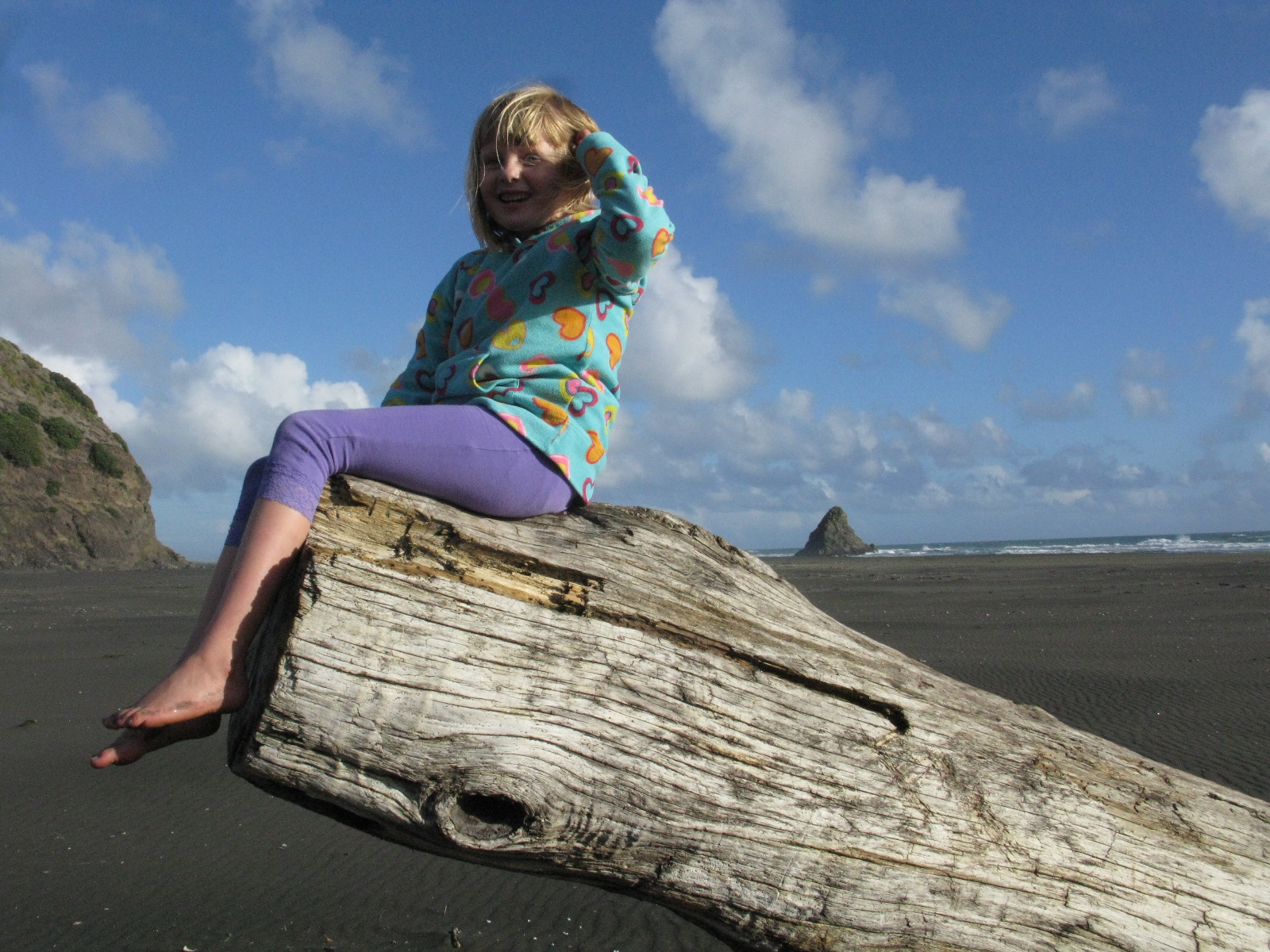
We all meet at a large tree trunk in the middle of the beach. We're the only three here. I'm quite stunned by how wild and beautiful it is. The sun dips down and as we leave a couple and their dog pass by, on a sunset walk (you can just make them out on the last photo below). Craig Potton's inspiration must have come from this place – New Zealand may be a small country but it is abundant with huge, open spaces.


Monday, 20 May 2013

To the city


One day I catch the train into the centre of Auckland. I meet a lovely old 80-something lady at the station and help her to get her ticket. Her name is Valma and when she hears I'm travelling around the world she tells me about the organisation she's a member of, Servus, a peace movement that hosts travellers worldwide. She also tells me she has 22 grandchildren and a clutch of great-grandchildren too.
So my first stop once I arrive at Britomart railway station is in honour of feisty Valma. It's a half-forgotten staircase saluting the suffragettes who won women the vote in New Zealand. They were the first women in the world eligible to vote, in 1893 (yes, really) and these slightly off-the-beaten-track tiled panels mark their phenomenal achievement.
Over the road is the Auckland Art Gallery and when I'm done going into raptures over the handsome Kauri timber extension I venture indoors to linger in front of its collection of 19th century paintings of contemporary Maoris, tattooed, wrapped in finery and fiercely proud. I also like this gigantic flower chandelier suspended in the atrium, like an outsize version of something you'd find on your dressing table in a down-at-heel guest house. 


Behind the gallery is Albert Park, teeming with outdoor art and student life, then moving on a little I find old merchant houses now serving as university departments. Those windows reveal studious faces at work and serious looking tutorials in progress. 
Auckland University's clock tower is one of the city's most famous landmarks but here it is teamed with a recent addition to the cityscape, Sky Tower, cut down to size by this interesting perspective, I reckon.

My stroll takes me over to the Domain, one of central Auckland's greatest parks and home to the Auckland War Memorial Museum. What should I find along the way but a statue of Robert Burns. That's two I've seen now, this one and the one in Melbourne. I feel a surge of patriotic pride.

The Museum is so named because it was built originally to commemorate New Zealanders lost in all the wars, a great monument on a hill with views out to the harbour and beyond. Inside it is stuffed with treasures from all corners of the globe and Maori artifacts sourced closer to home.

There's an adventurous new extension positioned inside the building's original forecourt. It resembles a great wooden cocoon and when Anouk and Amanda arrive we make the most of the new space and its glass staircase.

The children's area of the museum is busy. They've clearly been inspired by the old exhibits in the vaults that no one particularly wants to look at these days – stuffed animals for example – but which serve as excellent educational tools for kids. So they've dusted them off, created a modern colourful setting for them and put them in context with interactive buttons, spyholes and display boards. It keeps me amused, anyway. Meanwhile, Amanda gets busy repairing the ripped spine of one of their books (spot the teacher). Anouk insists on doing a photo-shoot of me and Amanda on the steps of the gallery, then takes a few nature shots in the temperate houses. Pretty fine, I'd say.


Another day I visit Alberton, Amanda's local stately home. The house is elegant though a little gloomy inside with its 19th century furnishings and wallpaper frozen in time. The story interests me, however, the house being built by a Scotsman, Alan Taylor, who grew up in Edinburgh (he went to the Royal High) and then went to India to serve in a regiment. On being de-commissioned his father gave Alan and his brothers a lump sum each to enable them to emigrate to New Zealand and make something of themselves. Alan didn't do half bad with his share.

Saturday, 18 May 2013

Rosie on a roll


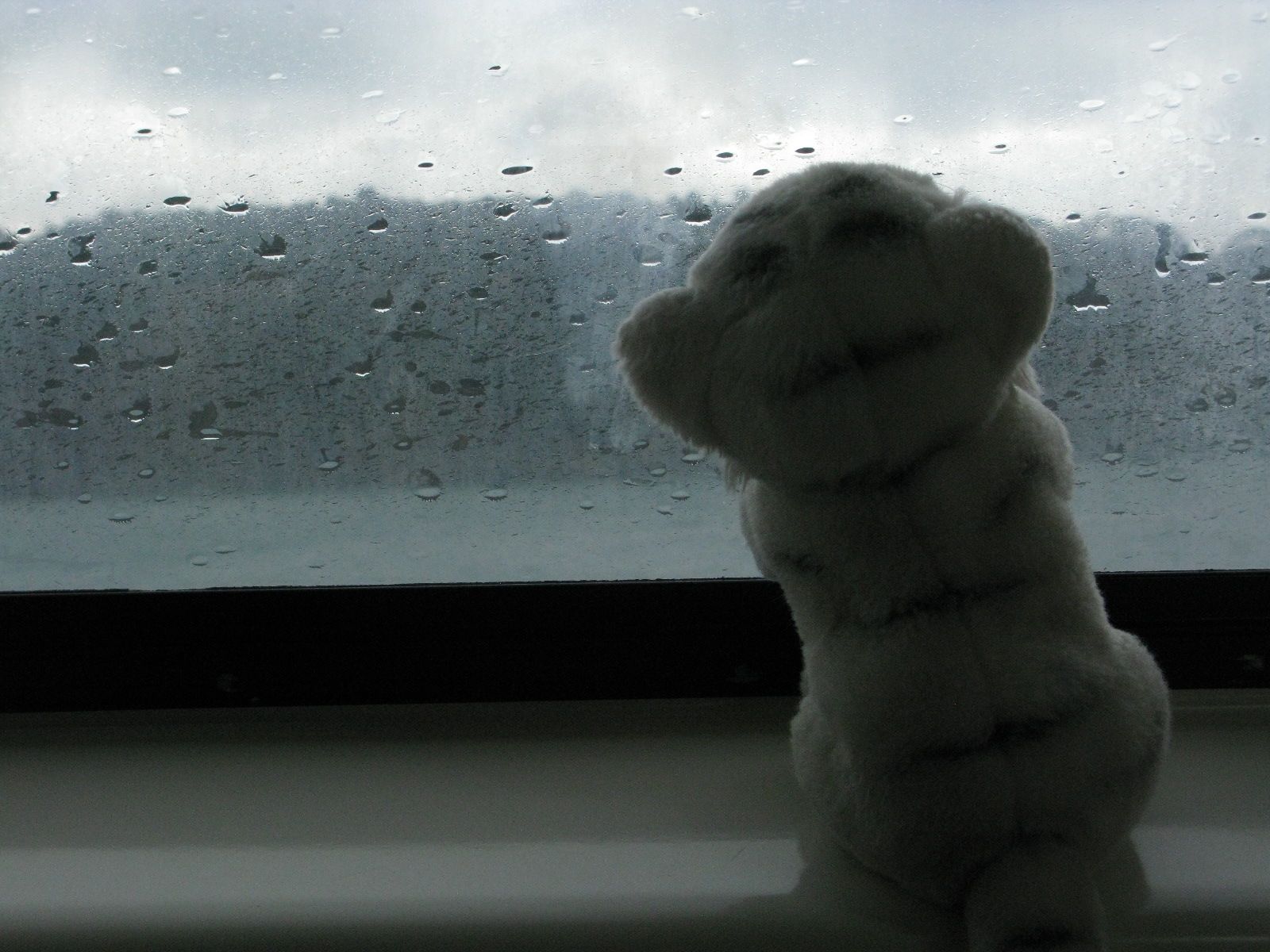
This is Rosie the Siberian Tiger's trip to Tiritiri Matangi...